lamb
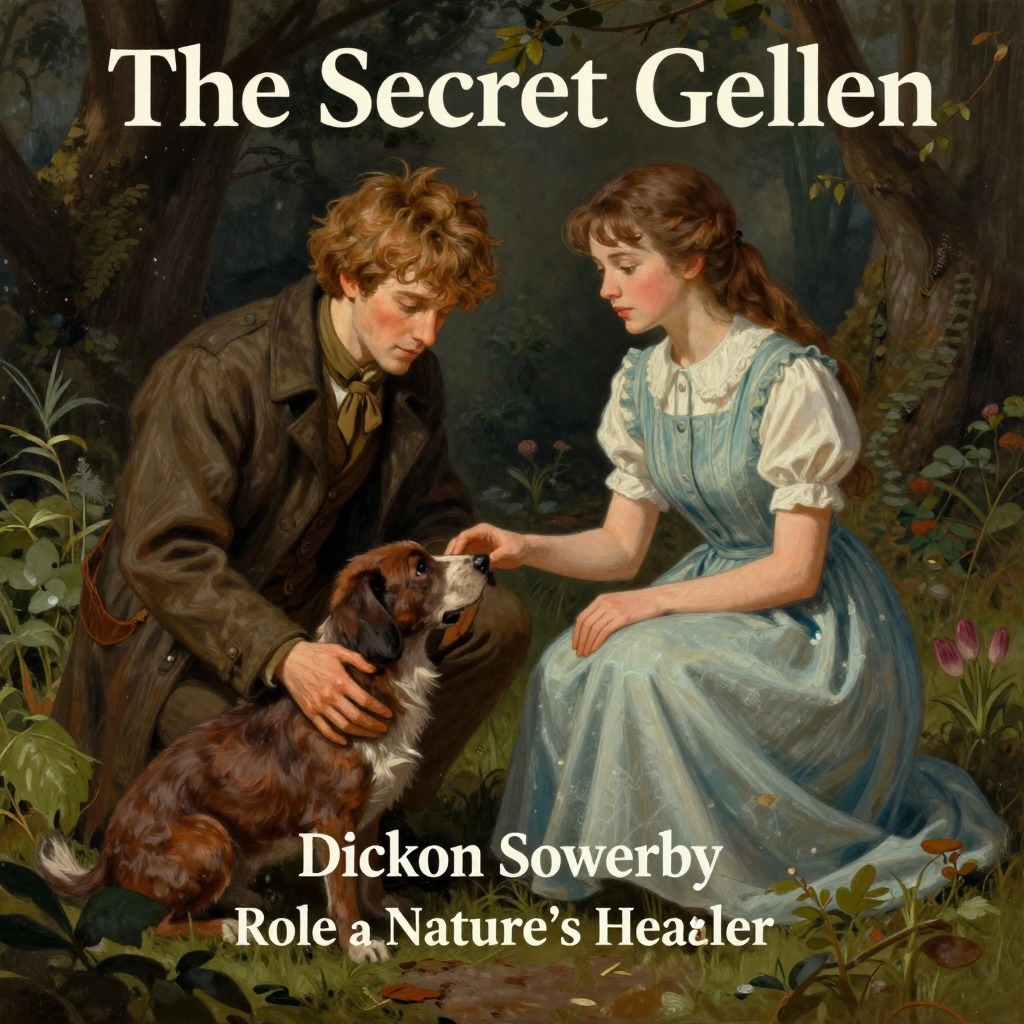
The lamb appears in the story as a tiny, vulnerable creature whose rescue and care embody the themes of new life, nurturing, and the transformative power of the secret garden. Found by Dickon Sowerby on the moor, the lamb is a motherless newborn, discovered lying by its dead mother among the gorse bushes. Dickon, who has experience with such orphans, wraps it in his jacket, takes it to the Sowerby cottage, lets it lie near the fire, and feeds it with warm milk. The lamb is described as a soft thing with a darling silly baby face and legs rather long for its body, and when Mary Lennox holds it on her lap under a tree, she feels too full of strange joy to speak.
Rescue and Nurturing
Dickon finds the lamb three days before introducing it to Colin, at sunrise, when he is standing on the moor listening to a skylark. He hears a weak bleating from among the gorse bushes and knows it is a hungry new lamb that must have lost its mother. He searches through the gorse, taking wrong turnings, until he sees a bit of white by a rock on top of the moor and finds the lamb half dead with cold and hunger. He carries it home in his arms, with its feeding bottle in his pocket alongside a squirrel. The lamb's rescue is a direct result of Dickon's intimate knowledge of the moor and his compassionate attentiveness to the needs of wild creatures.
Introduction to Colin
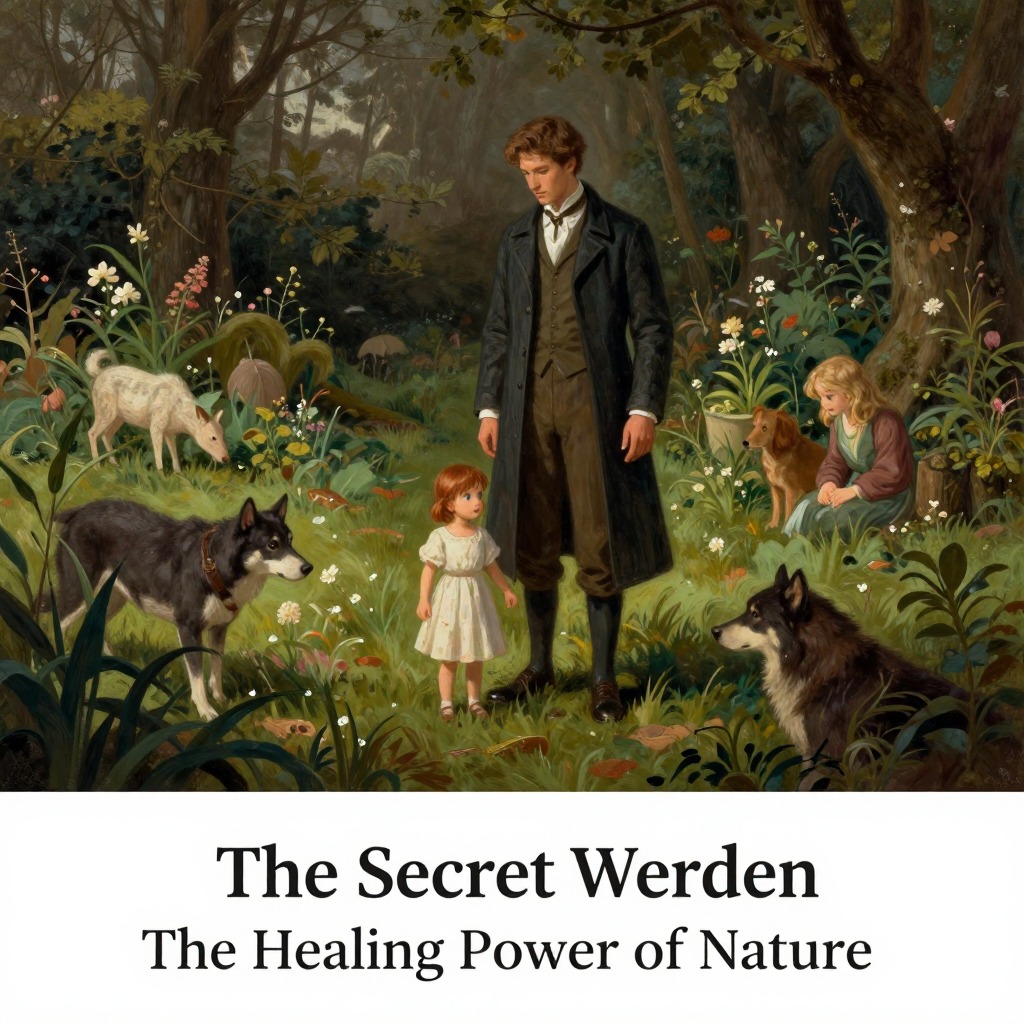
When Dickon brings the lamb to Colin Craven's room at Misselthwaite Manor, the creature becomes a powerful agent of connection and healing. Dickon walks through the long corridors with the lamb in his arms, accompanied by his other animals, and places it quietly on Colin's lap. The lamb immediately turns to the warm velvet of Colin's dressing-gown and begins to nuzzle and butt its tight-curled head against his side. This tactile, trusting gesture breaks through Colin's isolation and prompts his first direct question: "What is it doing?" Dickon explains that the lamb wants its mother, and he kneels to feed it from a bottle, pushing the rubber tip into its nuzzling mouth as the lamb sucks with ravenous ecstasy. The lamb's presence, its physical warmth and need, draws Colin out of his self-absorption and into a shared, joyful experience of caretaking.
Symbolic Significance
The lamb functions as a concentrated symbol of the secret garden's regenerative power. Like the garden itself, it is found seemingly dead or dying and is brought back to life through patient, loving care. Its helplessness and dependence evoke the nurturing instincts of Dickon and, by extension, of Susan Sowerby, whose milk and buns sustain the children. The lamb's arrival in Colin's room marks a turning point: it is the first of Dickon's "creatures" to be placed directly on Colin's body, creating an immediate, wordless bond. The lamb's feeding, its greedy sucking, and its soft woolly warmth become part of the "Magic" that Colin comes to believe in—a tangible, living proof that life can be restored. In the garden, the lamb later joins the circle of animals during the Magic ceremony, settling into a place of rest as if of its own desire, further integrating into the community of healing and growth.